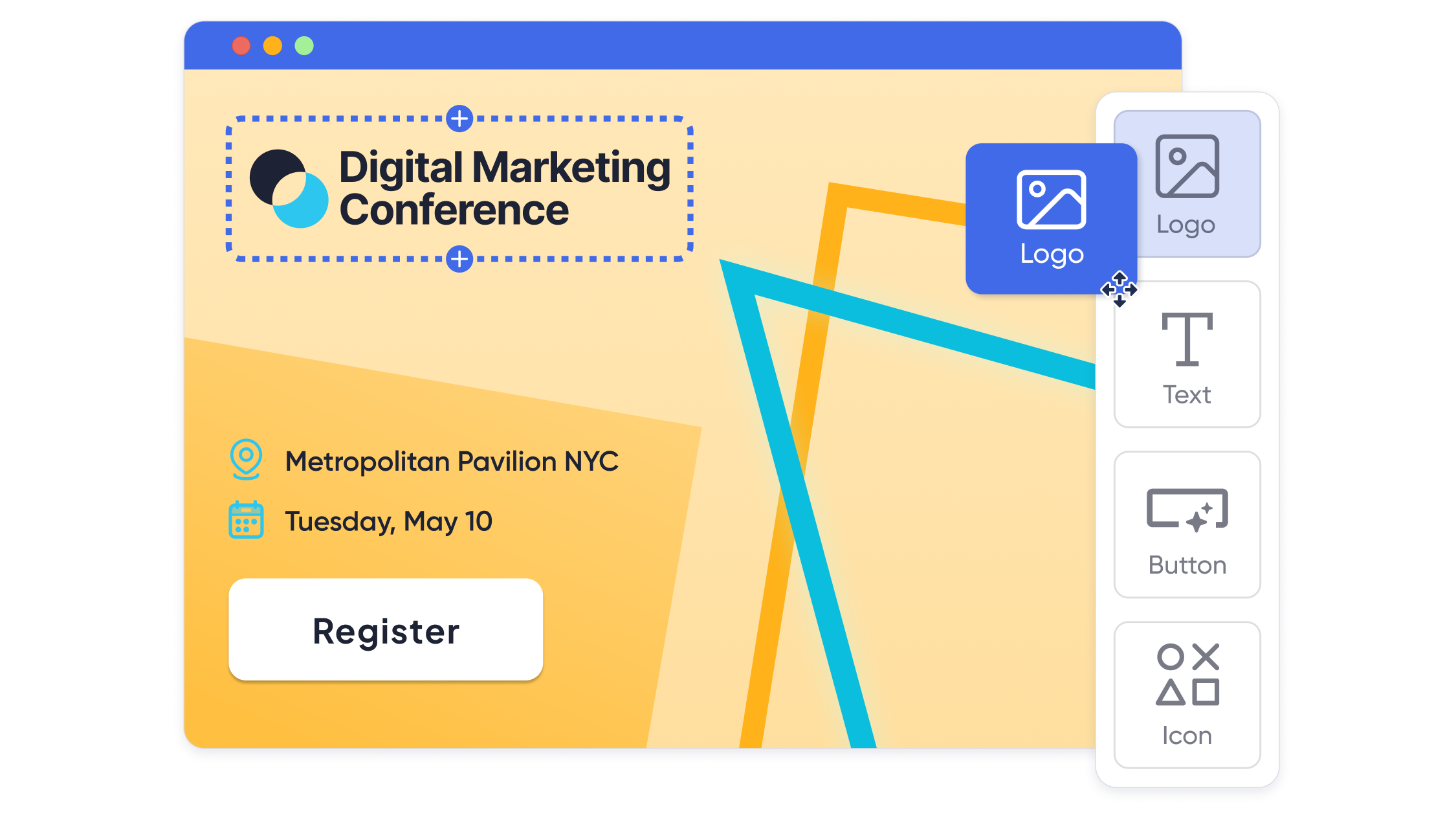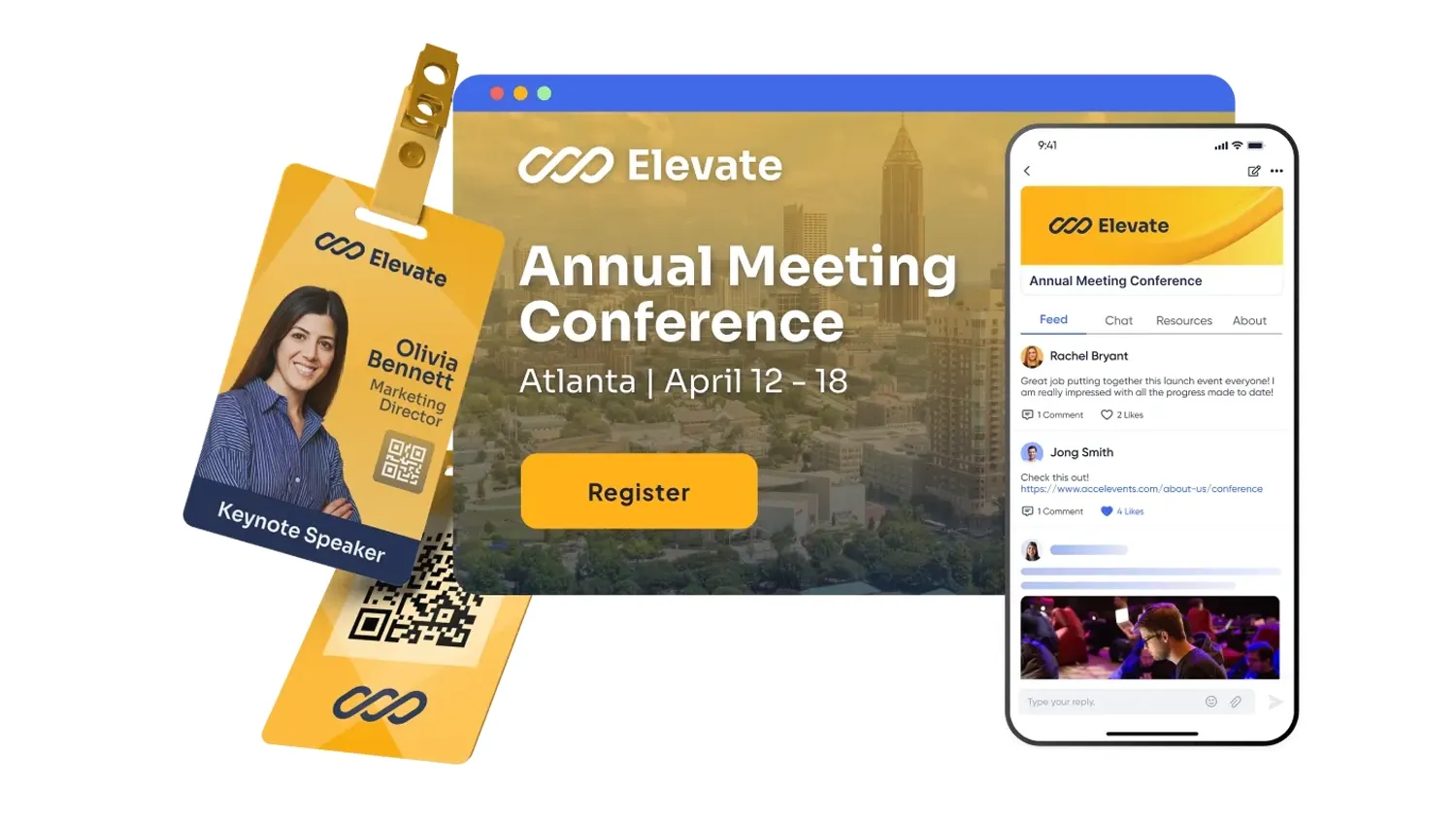

A white label event platform is event software that runs under your organization's brand instead of the vendor's. Your domain sits on the event site, your sending domain is on every email, your organization's name is on the App Store and Google Play listing, and your design carries through to check-in kiosks, badges, and reports. Attendees never see the vendor.
Accelevents, Cvent, Bizzabo, RainFocus, Stova, Swoogo, and vFairs all offer a version of it. They differ most on how the mobile app gets published and which plan includes full brand removal.
Four numbers to know before your first demo. Publishing your own app requires an Apple Developer Program membership at $99 a year and a Google Play developer account at a one-time $25. On Accelevents, the app build takes up to 15 business days and store review usually takes 24 to 72 hours, so plan on about four weeks from final assets to a live listing. White label is its own custom-quoted Accelevents plan above Enterprise, and published pricing starts at $7,500 for Professional and $13,500 for Business.

White label event platforms at a glance
The biggest practical difference between vendors is the app. Some publish a dedicated app under your organization. Others put your event inside a shared container app that hosts many organizers' events and shows your branding once attendees open it. Both are legitimate, but they aren't the same thing. The table shows which paths each vendor documents publicly.
Where Accelevents can benefit enterprises and associations
Accelevents packages white label as its own plan, so the scope is written down instead of negotiated piece by piece. The White Label plan on the pricing page includes everything in Enterprise, plus removal of Accelevents branding, a custom URL and email domain, a branded app with its own store listing, and single sign-on (SSO) as an option. You can hold any competitor's quote up against that list line by line.
In practice, that covers the touchpoints buyers ask about most. Event sites run on your domain or subdomain, built with the drag-and-drop event website builder or your own CSS. Emails send from your domain, and the sender name and reply-to address can change per event, which helps agencies and multi-brand teams. Onsite, the branded Admin App runs assisted event check-in or self-service kiosks, and badges print in your design. The white label event app carries your name, icon, and splash screen and is listed under your own Apple and Google developer accounts. Accelevents UI elements, from the dashboard header to the favicon and footer, are replaced with yours, and you can upload a custom font.
Branding doesn't change how data moves. Native connectors to Salesforce, HubSpot, and Marketo, plus REST APIs and webhooks, come with no fees for API access or native integrations. Registration, onsite, and app data share one data model, so reports don't need stitching together after the event.
Accelevents works with enterprises, associations, agencies, and nonprofits running in-person, hybrid, and virtual programs. In the Skift Meetings Event Tech Almanac 2025, which compiles self-reported data from 85 vendors, Accelevents scored 77 of 91 on total features, third among the 28 event management platforms profiled. It's rated 4.7 out of 5 on G2 and backed by a support team that responds in less than 21 seconds, 24/7.
Other platforms that provide white-label experiences
Each profile follows the same shape: what the vendor brands, how its app ships, and what to verify. Packaging changes often, so treat these as a starting checklist rather than a final answer.
Cvent
Cvent brands event websites, registration, communications, and its attendee app, and the company grew largely through acquisitions. Event apps run either inside the shared Cvent Events app or as a Custom Branded App. Cvent's app release notes say Cvent updates the shared app automatically, while a custom branded app needs a new build submitted to the app stores before attendees get new features. Teams that configure Cvent deeply often take certification courses first.
Verify in the demo: whether brand removal, custom domains, and the branded app are in your package or need a higher tier or services, and who requests app rebuilds. See the full Accelevents vs Cvent comparison.
Bizzabo
Bizzabo brands sites, communications, and its mobile experience across event portfolios. It offers two app paths: a container app, and a white label app with its own store listing, icon, and name on the attendee's home screen.
Verify in the demo: which app path your package includes, whether transactional and marketing emails send from your domain, and what store publishing involves on your side. See Accelevents vs Bizzabo.
RainFocus
RainFocus serves many of the world's largest event programs, a position tied to its system complexity and cost, and certification training is typically needed. Its attendee app supports custom pages, segmented push notifications, and sponsor placements. Its public materials don't say whose developer account a branded app is published under.
Verify in the demo: app publishing ownership, the implementation timeline, and how many services hours a branded rollout requires.
Stova
Stova (formerly Aventri) grew through acquisitions and brands registration, mobile, and onsite. One Stova customer's published user guide describes three app paths: the shared Stova container app, where attendees enter an event passcode; a customized container app listed under the organization's own brand; and a standalone app.
Verify in the demo: which app path your contract covers, the per-event cost of each, and whether analytics roll up across a large portfolio without extra services. See Accelevents vs Stova.
Swoogo
Swoogo focuses on marketer-led configuration and treats white labeling as the default for its web experiences, including event sites and registration. For mobile, Swoogo works with app partners such as Brella, which offers either a white-labeled app or a container app.
Verify in the demo: how data syncs between Swoogo and the app partner, whether one vendor supports both on show day, and whether the app is listed under your organization. See Accelevents vs Swoogo.
vFairs
vFairs offers branded event hubs for virtual and hybrid programs and markets a white label event app for iOS and Android.
Verify in the demo: what's white label in the app versus inside a shared app, whether transactional emails send from your domain, and how kiosks and badges fit your brand system. See Accelevents vs vFairs.
What true white label should include, beyond logos and colors
Uploading a logo and picking colors is branding. White label means the vendor disappears. Use this table as your checklist, and ask each vendor to show every row live with your brand assets applied.
Branded container app vs white label app
This distinction trips up more buyers than any other. A container app is one app in the stores that hosts many organizers' events. Attendees download it, find or unlock your event, and then see your branding. A white label app is your own listing, with your name and icon on the attendee's home screen.
Apple's rules explain why both exist. Guideline 4.2.6 of the App Store Review Guidelines rejects apps built from a commercial template unless the provider of the app's content submits them directly. Apple also names the alternative: a single app that hosts separate entries for each client, and it uses an event app as the example. That's the container model. A true white label app is published through your organization's own developer account, and a vendor that can't support that will offer a container app instead.
Neither is wrong. A container app costs less and needs no developer accounts, which suits one-off events. A white label app makes sense when the event is a recurring flagship, when the app doubles as a year-round member or customer product, or when sponsor deals depend on your brand owning the home screen. For more on the app itself, see how to offer a branded mobile app experience for your event.
How much does a white label event app cost?
Costs fall into three buckets: the stores, the platform, and your team's time.
Store fees are fixed and public. Apple's Developer Program costs $99 a year, and a Google Play developer account costs $25 once. Apple's organization enrollment also asks for a D-U-N-S number, so start that early if your company doesn't have one.
Platform cost depends on how the vendor packages white label. At Accelevents it's a defined plan. Published pricing starts at $7,500 for Professional (one event) and $13,500 for Business (unlimited events). Enterprise and White Label are quoted per program, and the white label attendee app is available on the White Label plan. Other vendors fold app branding into higher tiers, sell it per event, or run it as a services engagement, so ask for a line-item quote that separates platform, app branding, store publishing, and ongoing app updates.
Your team's time is the cost most budgets miss. With a platform, it's a few hours gathering assets and approving store screenshots. With a custom build, it's engineers maintaining iOS, Android, and web versions every year, long after the event ends.
How long does it take to launch a white label event app?
Most of the timeline sits with the build and the app stores. Here's what the steps look like on Accelevents, based on its published white label attendee app requirements.
Add it up and you're looking at about four weeks from final assets to a listing attendees can find in search. If you want the app in your registration confirmation emails, start at least six weeks before registration opens. A custom-built app, by comparison, takes months.
White label ticketing and registration
Registration is where white label earns its keep first. A buyer who lands on a checkout page with an unfamiliar domain hesitates. A branded domain with your design removes that doubt at the moment someone is about to pay.
White label ticketing also changes the math for sponsors. When the site, emails, and app look like your product, sponsor placements read as part of your event rather than ads in someone else's software. That's easier to sell at a premium, especially when exhibitors get lead capture and ROI reporting inside the same brand.
On Accelevents, ticketing and registration include unlimited ticket types and custom fields, discount and access codes, conditional logic by attendee type, group booking, waitlists, and approval workflows on Enterprise and above. Templates and permissions carry across events, so a portfolio of 30 events keeps one look instead of 30 slightly different ones.
White label platform vs custom-built event app
Some teams consider building their own app. Here's how the three options compare.
A custom build makes sense when the app is a product in its own right, with workflows no event platform supports. For most programs, it means rebuilding session schedules, access control, notifications, check-in, and lead capture that a platform already ships, then paying to maintain them every year.
How to test white label claims in a demo
The Skift Meetings Event Tech Almanac 2025 tells buyers to ask vendors directly about limitations, true costs including hidden fees, and support response times, and to treat wireframes in place of working product or vague pricing as red flags. White label claims are a good place to apply that advice.
Send each vendor your logo, colors, fonts, and a domain before the demo. Ask them to show a live customer app in the App Store, a test email from a branded domain, a kiosk check-in screen, and a printed badge, all with your brand applied. Get the app publishing model and the store timeline in writing. Then ask what happens on show day when something breaks: the Almanac found that 41% of surveyed vendors couldn't commit to a support response time in their service level agreement (SLA).
FAQs
What is a white label event platform?
It's event software published under your organization's brand instead of the vendor's. A full deployment covers your own domain on event sites, your email sending domain, an app store listing under your organization, and unbranded check-in, badges, and reports.
What's the difference between a branded app and a container app?
A container app is one vendor app that hosts many organizers' events. Attendees download it, find or unlock your event, and then see your branding inside. A white label app is its own listing in the App Store and Google Play under your organization's name and developer account. Apple's App Store guideline 4.2.6 is the reason both models exist.
How much does a white-label event app cost?
Store fees are $99 a year for Apple's Developer Program and a one-time $25 for a Google Play developer account. Platform cost depends on the vendor. Accelevents publishes starting prices of $7,500 for Professional and $13,500 for Business, while Enterprise and White Label are quoted per program and the white label app is available on the White Label plan. Ask every vendor for a line-item quote that covers app branding, store publishing, and ongoing updates.
How long does it take to get a white-label app into the App Store and Google Play?
On Accelevents, the build takes up to 15 business days before store submission, store review usually takes 24 to 72 hours, and search listings can take 1 to 7 days to appear depending on the region. Plan on about four weeks from final assets, plus time to set up developer accounts if you don't have them yet.
Does a white-label event app work on both iOS and Android?
It should. Accelevents publishes the white label attendee app to both the App Store and Google Play from the same event data, so you set it up once. Ask other vendors whether both platforms are included or priced separately.
Which white-label event app works for large conferences?
Look for an app that runs on the same platform as registration and onsite check-in, so session changes and attendee data stay in sync without exports. For large conferences, also confirm exhibitor lead capture, segmented push notifications, and how quickly support responds on show day. Accelevents, Cvent, Bizzabo, and RainFocus all run large programs. They differ in setup effort and in how the app is published.
Can I use my own email domain for all attendee communications?
On a full white label plan, yes. Accelevents sends from your domain once it's set up, and you can change the sender name and reply-to address per event. Confirm that transactional emails, like order confirmations, use your domain as well as marketing emails.
How does white label affect CRM and marketing automation integrations?
It shouldn't. A white label front end should pass the same data to Salesforce, HubSpot, or Marketo through native connectors or APIs. Accelevents charges no fees for native integrations or API access.
Will onsite check-in and badges be branded too?
They should be, if the platform includes onsite tools. Accelevents runs assisted and self-service kiosk check-in through its branded Admin App and prints badges from your own templates. Ask every vendor to show a check-in screen and print a sample badge in your style guide.
If you want registration, onsite, and the app running under your brand without building any of it, request a demo and we'll walk through your workflow with your colors, domain, and app listing applied.