
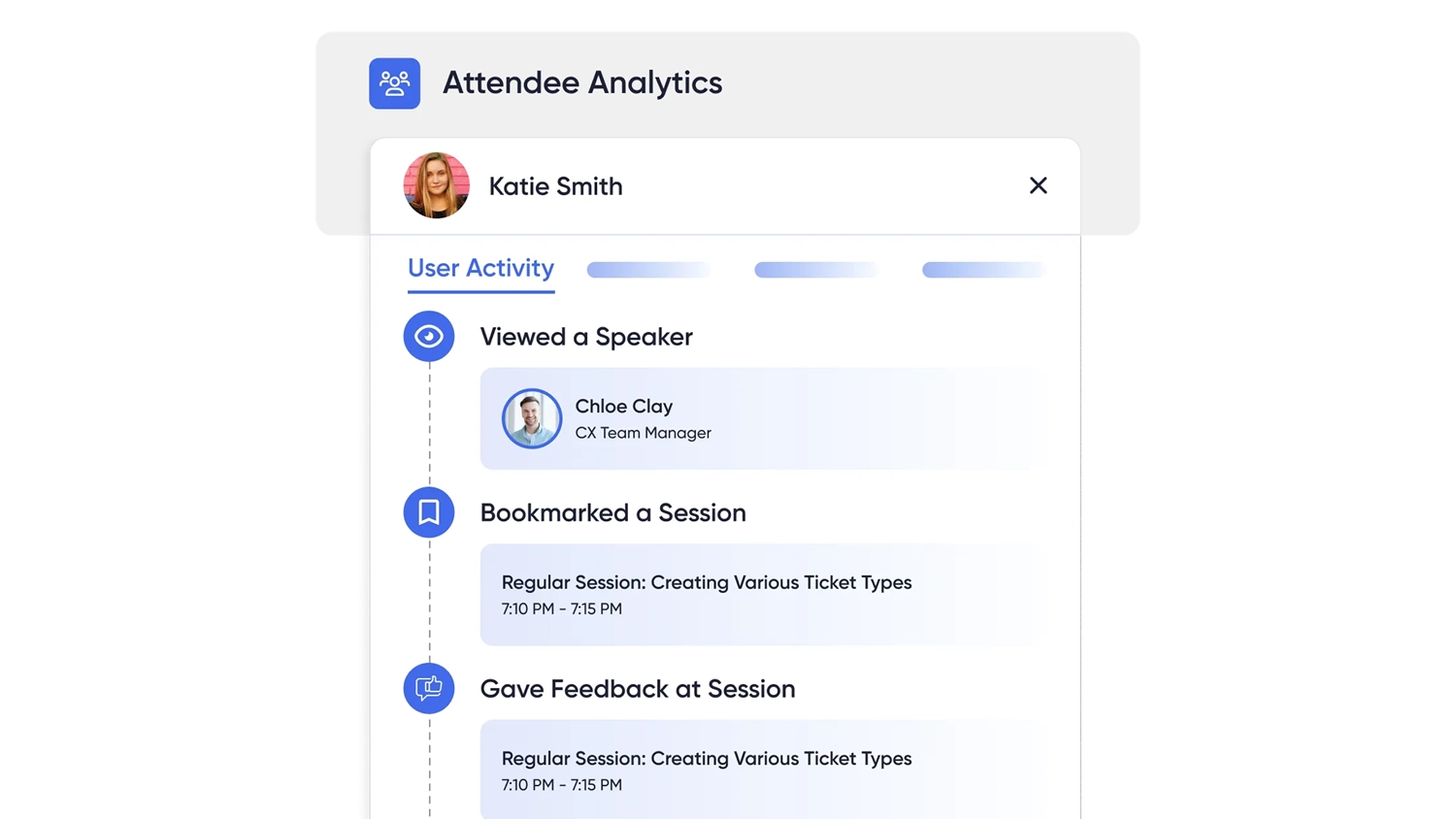
What counts as “strong analytics” in event tech? In practice, you are looking for more than a pretty dashboard. A platform needs to tie together event registration, onsite behavior, virtual engagement, and revenue in a single view so you can prove impact, not just count check-ins. Strong analytics typically include: real-time dashboards, cross-event reporting, exhibitor and sponsor insights, granular attendee journeys, and clean integrations into your CRM and marketing tools. You also want clear data ownership, strong privacy controls, and reporting that non-analysts can actually use day to day.
When you evaluate platforms on analytics, focus on 5 dimensions:
- Speed and freshness of data (real time vs overnight batches).
- Depth of reporting across sessions, exhibitors, sponsors, and campaigns.
- Cross-event and year-on-year views so you can track trends, not just one-off events.
- Integrations and API access to push data into CRM, MAP, AMS, and BI tools.
- Data governance and sharing, including permissions, export options, and who really owns the data.
With that in mind, let’s look at where the main platforms stand, starting with Accelevents.

Where Accelevents can benefit enterprises and associations
If you want analytics that are built into your whole event lifecycle, not bolted on at the end, Accelevents is designed for that reality. It was built as a modern, enterprise-ready event management platform that supports in-person, virtual, and hybrid events from one place, covering registration, websites, mobile apps, abstract management, lead capture, and more.
At a brand level, Accelevents leans hard into the idea that event tech should feel straightforward and accessible so planning teams can focus on creating great experiences instead of wrestling with a maze of point solutions. Today more than 1,847 customers use Accelevents across conferences, trade shows, internal meetings, and continuing education events, especially in larger enterprises and member-based associations that depend on events for growth and revenue.
Crucially for analytics, Accelevents was intentionally built on one consistent data model across registration, onsite, mobile, and virtual, creating a seamless experience for event organizers, attendees, exhibitors, and speakers. That unified data model is what allows you to see a single person’s journey from email click to ticket purchase to session attendance and booth visits, rather than stitching it together manually from multiple systems.
On the reporting side, Accelevents focuses on: shareable dashboards, real-time metrics, and cross-event analytics that marketing and events teams can access without relying on a separate BI project. You get live views of registrations, attendance, engagement, CE credit completion, exhibitor leads, and revenue, plus exports and APIs when your data or analytics team wants to go deeper.
Integrations matter too. Accelevents includes native connectors to Salesforce, HubSpot, Marketo, and a range of association management systems, with no extra integration fees and well documented REST APIs and webhooks when you need something custom. That means your event data actually shows up where sales, membership, and marketing expect to see it, instead of living forever in spreadsheets.
Support and services are built around busy teams who cannot afford analytics outages at showtime. Accelevents is known for a responsive support team that targets under-21-second responses 24/7, plus onboarding and customer success resources aimed at getting enterprise and association programs live quickly rather than stretching implementations over many months. Accelevents bridges complex enterprise features and ease of use, delivering a balanced, highly customizable, all-in-one event solution.
Highlights enterprises and associations care about
- Real-time, shareable dashboards that combine registration, attendance, engagement, and revenue so leadership sees event impact in one place.
- Cross-event and year-on-year reporting that lets you benchmark portfolio performance and spot trends across conferences, trade shows, and education programs.
- Exhibitor and sponsor analytics including booth traffic, lead capture, and meeting bookings so you can prove ROI and grow sponsorship packages.
- CE credit tracking and certificates tied directly to session attendance and evaluations, with audit-ready records for regulated industries.
- First-party data capture across web, mobile, and virtual plus integrations and API access so analytics flow into CRM, marketing automation, and BI tools without re-keying.
- Transparent, modular pricing so you can scale analytics across your portfolio without guessing which reports are locked behind another tier.
Vendor by vendor: how other platforms handle analytics
Below are quick, analytics-focused snapshots of the other major platforms on your shortlist. These are all capable systems, but they differ in who they serve, how complex they are to run, and how easy it is to unlock their reporting.
Cvent
What large conference and meetings teams get: A long-standing enterprise platform with broad portfolio reporting, real-time dashboards, and many prebuilt reports across registration and meetings data.
Good to know: Cvent has grown heavily through acquisition and often requires certification-level training to master, so teams should expect a steeper learning curve and potential differences between modules when building analytics.
Bizzabo
What corporate event marketing teams get: An event OS that pairs registration, mobile, and engagement tools with portfolio-level analytics and attendee behavior data, including support for multi-event programs.
Good to know: While analytics can be powerful, some teams report that custom reporting and integrations may require extra services or internal specialists, so be sure to validate your exact use cases during demos.
RainFocus
What global enterprise conference teams get: A platform aimed at the world’s largest B2B events, with deep data models and analytics built to tie event activity into complex tech stacks.
Good to know: RainFocus caters to very large programs with significant budgets; its system complexity and cost typically mean formal training and dedicated admins are needed to fully leverage analytics.
Stova
What multi-event organizers get: A suite that grew from several acquisitions, bringing together registration, mobile, and virtual modules with standard dashboards and exports across each.
Good to know: Because Stova combines multiple acquired products, reviewers often note that analytics can feel fragmented across modules, so you will want to explore how unified reporting really looks for your program.
Swoogo
What lean event teams get: A strong focus on registration and website tools with practical reporting that covers core metrics and exports many planners still rely on for analysis.
Good to know: Swoogo’s analytics are generally geared toward tactical reporting; if you need deep cross-event analytics or very detailed exhibitor and sponsor data out of the box, expect to lean more on external BI or spreadsheets.
vFairs
What virtual and hybrid event teams get: A virtual-first platform with solid engagement metrics, booth visits, and session performance reports that work well for online expos and fairs.
Good to know: vFairs shines for virtual environments; if your strategy is shifting toward large in-person conferences with portfolio-level analytics, check carefully how the reporting handles onsite data and multi-event trends.
Demo and POC checklist for analytics and reporting
No matter which platforms you shortlist, your demo or proof of concept is where you really find out how analytics will work for your events. A good way to keep vendors honest is to walk in with a concrete reporting checklist.
Based on common RFP demo guidelines for large medical and association meetings, here are analytics-specific items to ask every vendor to show live:
- User activity reports that show page views, clicks, session attendance, and interactions across both the website and mobile app.
- Session and speaker analytics, including filters by track, format, CE credit eligibility, and role (speaker, moderator, author).
- Sponsor and advertising reports that break down impressions, clicks, leads, and meetings for sponsored banners, tiles, and virtual booths.
- Real-time dashboards and how quickly data updates on the live site when registration, sessions, or attendance change.
- APIs and exports for pushing session, attendee, and engagement data into your downstream systems.
- Permissions and data access controls, such as exhibitor portals where sponsors can self-serve their own lead and engagement data without exposing your full dataset.
During the demo, use actual past events and real reporting needs: “Show me how I’d pull sponsor ROI for our annual expo” or “Show me a cross-event pipeline report for our user conference series.” Then compare how quickly each vendor gets there, what the output looks like, and how much post-processing work your team would still have to do.
Putting it together
Strong analytics are less about who has the longest feature list and more about which platform will give your team trustworthy, usable insight with the least possible friction. Accelevents is a good fit if you want an all-in-one platform with a unified data model, native integrations, and reporting that works across conferences, trade shows, internal meetings, and CE-heavy programs. Cvent, RainFocus, and Stova lean toward very large, complex ecosystems where you have dedicated admins and longer timelines, while Bizzabo, Swoogo, and vFairs can be attractive if your needs are more focused or virtual-first.
The safest approach is to define your analytics must-haves, run structured demos that stress test real reporting scenarios, and involve stakeholders from marketing, sales, membership, and finance in the evaluation. That way you avoid “shiny object syndrome” and pick the platform that will actually support your portfolio for the next few years, not just your next single event.
FAQ
Is Accelevents or Cvent better if I need real-time analytics for a global user conference?
For most mid-market and many enterprise teams, Accelevents is often easier to roll out because its reporting, mobile app, and virtual hub share one data model and a consistent UI, so dashboards update in real time without jumping between modules. Cvent offers very deep analytics across a large meetings portfolio but typically requires more configuration, training, and admin resources to maintain, so it is a stronger fit when you already run a very large centralized meetings program.
How should enterprise marketing teams compare analytics across Accelevents, RainFocus, and Bizzabo?
Start by listing the reports that drive decisions today, like pipeline influenced by events, product interest by account, and sponsor ROI, then ask each vendor to show those reports live using your sample data. Accelevents usually wins on speed to value and unified reporting, RainFocus focuses on highly complex global programs with equally complex analytics, and Bizzabo can be appealing if your portfolio is heavily centered on flagship brand events with strong engagement data.
What should I look for in event analytics if my team relies heavily on Salesforce and HubSpot?
You will want native integrations that sync contacts, activities, and campaign data automatically, plus clear documentation and no surprise integration fees. Accelevents includes built-in connectors to Salesforce and HubSpot, along with REST APIs and webhooks, so your CRM and marketing teams can track event influence without manual imports, while other platforms may require middleware or services to reach the same outcome.
How can associations use Accelevents reporting to manage CE credits and certificates?
Accelevents can track session attendance, evaluate completion, and automatically assign continuing education credits, then generate certificates and maintain audit-ready logs, all from within the same reporting environment you use for attendance and engagement. Associations can then export or sync those records into their learning management system or AMS so member histories stay accurate across events and educational programs.
Do exhibitors get access to their own booth and lead analytics in Accelevents compared with vFairs?
In Accelevents, exhibitors can use a dedicated portal and mobile app tools to capture leads, score and annotate them, and see real-time booth traffic and meeting data, which gives them clear ROI without needing access to your master reports. vFairs also offers exhibitor analytics for virtual booths, but if your strategy involves large onsite expos, it is worth checking how its exhibitor reporting compares to Accelevents for badge scans, in-person meetings, and multi-event history.
If you want to see Accelevents analytics working with your own use cases, you can request a demo to explore how the platform can simplify your event management process.